Bambu Lab Patent Targets a Flatter, More Evenly Heated Print Bed
Bambu Lab's patent application describes a heater seated against the underside of the bed body, with changes to its structure and magnets aimed at keeping the print surface flat and evenly heated.
Contents
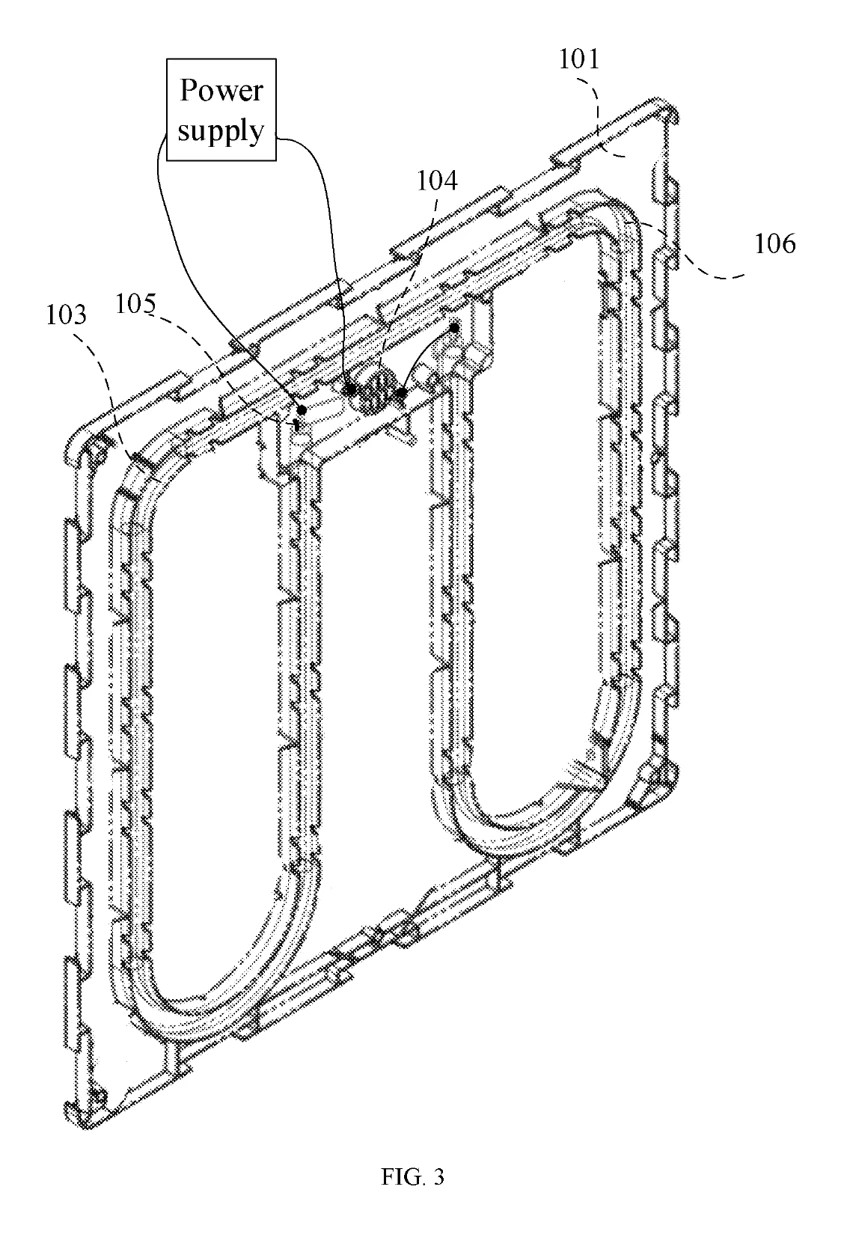
Figure 3 shows the underside of the proposed bed, with the heater following a recessed path through the bed body. Drawing: US20260264331A1.
Bambu Lab has described a heated-bed design that seats its heater in a recess under the bed body, aiming to improve heat distribution while keeping the surface carrying the build plate flat.
The US patent application, published as US20260264331A1 on September 10, was filed by Shenzhen Tuozhu Technology, the company behind Bambu Lab. The design dates back to a Chinese filing from November 2023.
A heated bed has to transfer heat into the build plate and stay flat as it warms up. The filing addresses both through the structure beneath the printing surface, with reinforcing ribs and a heater held closely against the bed body. It also describes a different approach to holding the build plate in place.
A Heater Seated Against the Bed
The assembly has three main parts: the bed body, a heating unit and a lower case. A heating tube or resistance wire sits against the underside of the body. In the recessed version, the surrounding walls help hold the heater in position and increase its contact with the bed.
The drawings show a path running through both the outer and central areas. The application also allows an S-shaped arrangement and changes to how closely the heater runs are spaced. Bambu's stated aim is to reduce temperature differences across the surface, including areas farther from the center.
That matters when a part occupies a large portion of the plate. A temperature reading at one point does not describe the whole surface, and a print can reach areas that are cooler than the region around the sensor.
Heat-conducting material, such as silicone grease, can fill the space between the heater and the body. The application describes several ways of securing the heating unit, including a press fit, screws and casting it into the recess. The lower case closes the assembly from underneath.
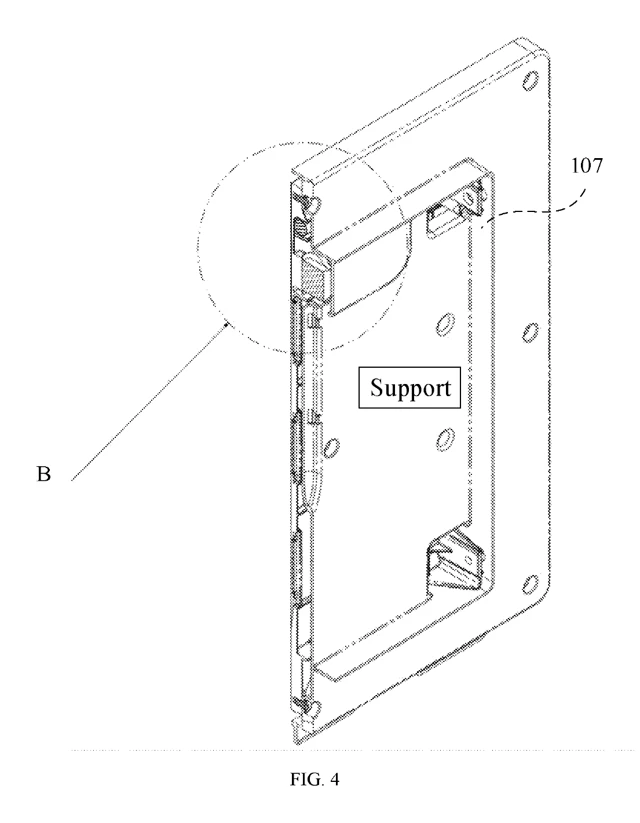
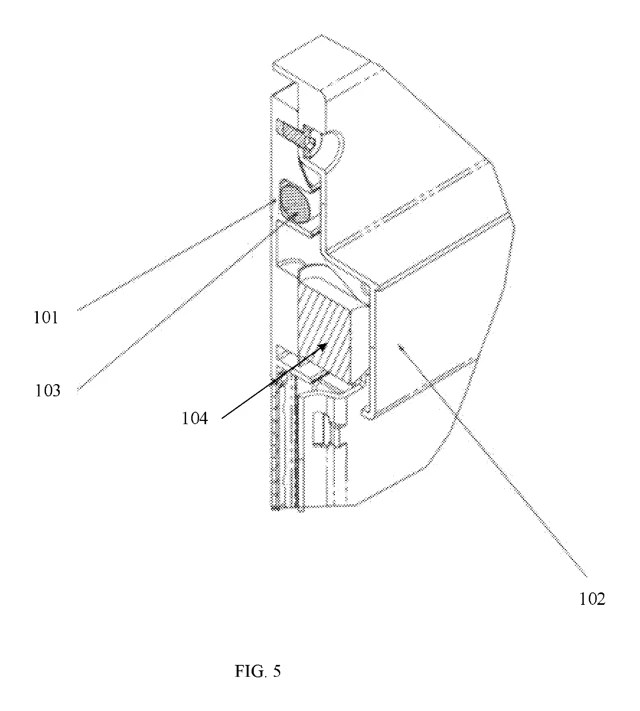
Figures 4 and 5 show a cutaway through the assembly and an enlarged detail. The heater sits beneath the bed body, not in the removable print panel. Drawings: US20260264331A1.
Flatness Is Part of the Design
The application also addresses how the bed behaves as it warms up. It contrasts the proposed construction with an aluminum-substrate heating assembly that combines aluminum and copper. Those materials expand at different rates, which the filing identifies as a source of poor flatness.
One option is a flat bed body made from a single material. Reinforcing ribs on its underside would add stiffness, while the heating unit supplies heat through contact with the body. The intended result is a flatter bed without sacrificing heating efficiency.
The body could be die-cast, stamped or extruded, so the design does not depend on machining a channel into a solid aluminum block. Several manufacturing methods could produce the arrangement shown in the drawings.
The bed can also carry a temperature sensor on its underside and a switch that disconnects the heater if it reaches a specified safety threshold. Insulation beneath the case is another option, separating the heated assembly from the printer structure below it.
Stronger Magnets in the Outer Region
A separate part of the filing concerns how the print panel is held against the heated bed. One arrangement uses stronger magnets in an outer region, with weaker magnets in a second region inside it. Using different strengths is intended to reduce the cost of the magnets needed to retain the panel.
Those magnets hold the panel to the bed; they do not directly make the plastic stick to the printing surface. The heater, bed body and panel still have to transfer heat between them. Keeping the panel seated and the bed flat supports that contact, while the panel's surface determines how it grips the printed material.
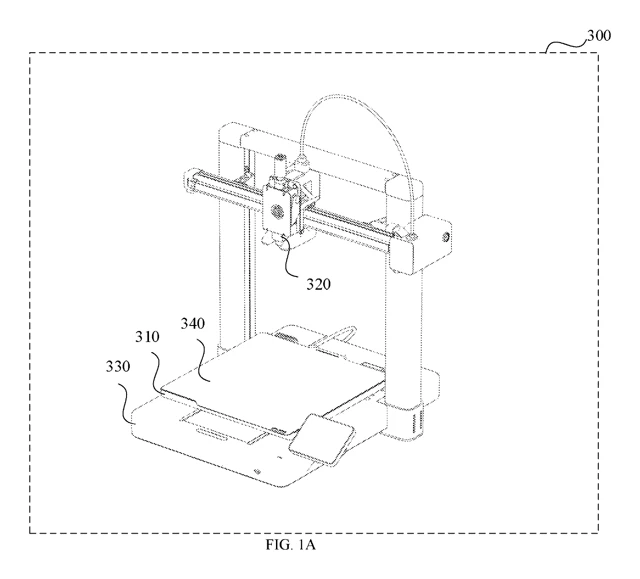
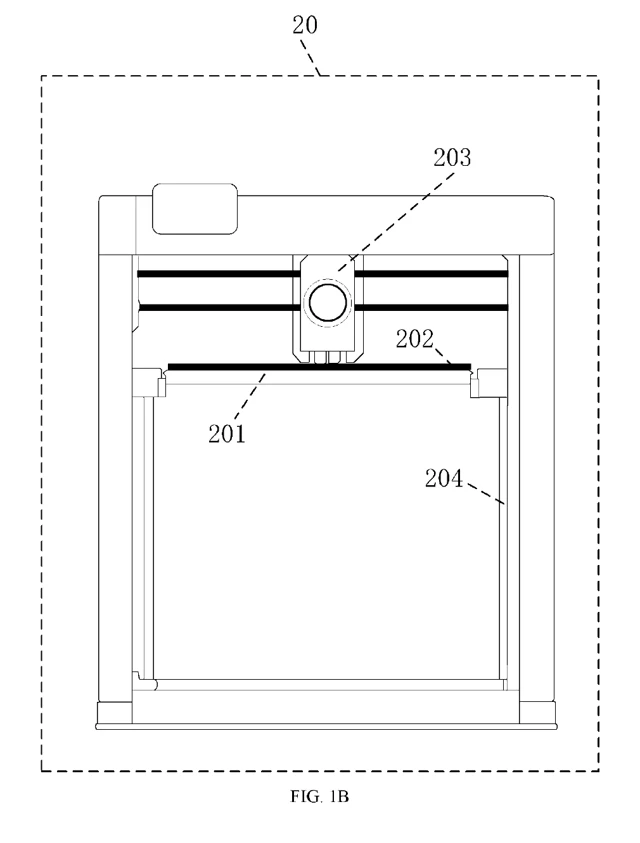
Figures 1A and 1B illustrate two ways to mount the bed. They are examples from the application, not images of announced printers. Drawings: US20260264331A1.
The printer drawings show beds on both a sliding base and vertical lead screws, so they do not point to one particular upcoming machine. The filing gives no production schedule or test results showing how much the design would improve flatness or temperature consistency.
Share this article



Related articles
3D Printers · Aug 15, 2026
Bambu Lab Patent Shows a Nine-Bay Hotend Rack
Bambu Lab's patent drops a hotend into the rack and releases it from the toolhead in the same movement. The drawings show nine bays, and only the hotend comes away. The extruder stays behind.
6 min read
3D Printers · Sep 13, 2026
Bambu Lab H3C Appears in FCC Filing
The H3C name appears on a public FCC label, but Bambu Lab has yet to announce the printer. Further filings for an S1 scanner and new AMS units have since emerged.
4 min read
3D Printers · Sep 23, 2026
Bambu Lab S1 Scanner and Two New AMS Models Surface in FCC Filings
After the H3C and X2D Pro, FCC records have revealed three more Bambu Lab product names: an S1 3D scanner and two new AMS units.
2 min read