The Best Desktop UV Printer in 2026: Every Machine Compared
From enclosed machines aimed at first-time users to open-ink flatbeds and full-color 3D systems, these are the desktop UV printers worth considering in 2026.
Contents
- The Best Desktop UV Printers Compared
- What Matters Beyond the Specification Table
- Best Established Choice: eufyMake E1
- A Faster Flatbed Mode Is Now Available
- Ink and Maintenance Remain the Main Cost
- Best Overall: xTool O1 Omni
- Upcoming: HeyGears G1X and Morpho
- HeyGears G1X: UV Printing and Full-Color 3D
- Morpho: A More Open Desktop Platform
- Other Desktop UV Printers Worth Knowing
- OMTech Spectra A3+
- Epson SureColor V1070
- Longer ePrint and Procolored
- Ink Cost Is Only the Starting Point
- Which Desktop UV Printer Should You Buy?
- Frequently Asked Questions
The xTool O1 Omni is our current overall pick. The Single UV edition starts at $2,199, undercutting the eufyMake E1, while the $3,099 Dual UV model adds a second printhead, separate white inks for rigid and flexible materials, and fluorescent colors. Every edition has a 330 x 420 mm bed, relief up to 7 mm and a scanning system that travels across the full print area.
The eufyMake E1 remains the more established choice. It is in stock, has been independently reviewed and has more than a year of owner experience behind it. The O1 has begun shipping, but the E1's longer public record still makes its maintenance demands and running costs easier to judge.
Other machines suit more specific requirements. The OMTech Spectra A3+ combines open ink tanks with a vacuum bed, while the smaller and substantially more expensive Epson V1070 comes with an established dealer and service network. HeyGears G1X and Morpho are the main upcoming alternatives, offering full-color 3D printing and a more open accessory system respectively.
The right choice depends on what will actually be printed. Rigid products, flexible materials, apparel, UV-DTF transfers and full-color 3D objects require different inks, accessories and finishing equipment. The machine should fit the intended product range without adding workflows that will rarely be used.
A desktop UV printer jets color, white ink and varnish onto an existing object and cures each pass with UV light. Repeated white or varnish layers can create a raised surface, but the process normally decorates a product rather than building one. The HeyGears G1X full-color 3D configuration is the exception covered below.
The Best Desktop UV Printers Compared
| Machine | Best for | Current US price | Print area | Relief | Availability |
|---|---|---|---|---|---|
| eufyMake E1 | Established, beginner-friendly workflow | $2,409 Basic / $3,209 Deluxe | 330 x 420 mm | Up to 5 mm | In stock; 1-3 business days |
| xTool O1 Omni | Best overall; multiple workflow editions | $2,199 / $3,099 / $3,199 | 330 x 420 mm | Up to 7 mm | Shipping; new orders estimated late October |
| HeyGears G1X | Full-color 3D objects | $3,299 Starter / $3,599 Full-3D | 420 x 330 mm | 5 mm in UV mode | Kickstarter; December 2026 target |
| Morpho | Open accessories and refillable cartridges | $1,799 Standard / $2,999 Pro | 420 x 330 mm with A3 bed | 5 mm / up to 60 mm on Pro | Kickstarter; Dec 2026-Jan 2027 factory target |
| OMTech Spectra A3+ | Open ink and batch production | $2,999.99 / $3,999.99 | 350 x 450 mm | Up to 5 mm | Official store says 1 business day |
| Epson SureColor V1070 | Dealer service and support | $9,299 | 212 x 299 mm | Texture effects | Epson direct out of stock; dealer sales |
| Longer ePrint | Open-ink multi-process system | $1,699 SE / $2,499 dual | 310 x 420 mm | Up to 15 mm listed | Pre-order; end-of-September estimate |
| Procolored V4-V11 Pro | Traditional compact flatbeds | $2,299-$5,999 | A5 to A3 | Varies | Available by model |
Prices are current US list or crowdfunding reward prices. Temporary coupons, taxes and shipping can change the final amount. Kickstarter and estimated shipping dates are targets rather than guaranteed delivery dates.
What Matters Beyond the Specification Table
The printhead influences resolution, speed, ink configuration and the eventual cost of replacement. Epson's F1080 is the common entry-level option in this group. The larger i3200 used by the HeyGears G1X and Morpho Pro has more nozzles and is intended for higher throughput, while eufyMake and Epson handle replacement through their own service channels.
White ink is often the larger variable in running cost. It forms the base layer on dark or transparent products and supplies most of the material in raised textures. Two machines with similar CMYK consumption can therefore have very different costs once white layers, cleaning cycles and failed prints are included.
Maximum relief height can be misleading on its own. A 5 or 7 mm maximum is not the thickness of every texture; it is the upper limit produced by stacking many layers of ink. The taller the print, the longer it takes and the more white ink it consumes. Independent print times and measured ink use are more useful than the maximum height alone.
Some advertised workflows also require equipment outside the printer. Rotary printing needs an attachment, UV-DTF requires film and a laminator, and DTF or DTG apparel work requires a heat press. Those additions affect both cost and workspace requirements.
Best Established Choice: eufyMake E1
The E1 costs $2,409 as a Basic bundle with its initial ink set, or $3,209 as a Deluxe bundle with the rotary attachment and UV-DTF laminator. eufyMake's US store lists it as in stock with dispatch in one to three business days.
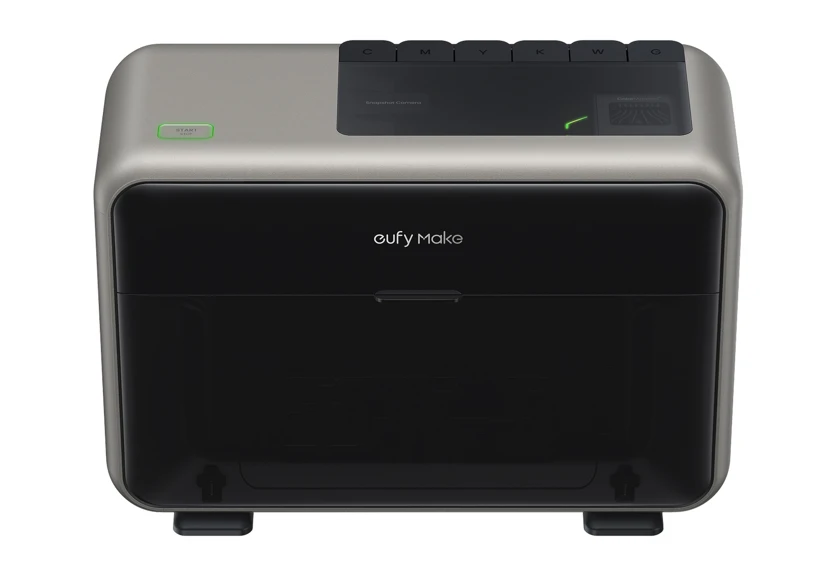
Its 330 x 420 mm bed is the same size as the O1's and the largest upcoming machines in this comparison. The E1 prints at up to 1440 dpi, accepts objects up to 100 mm tall and builds raised textures up to 5 mm. The camera and two lasers automate placement and height measurement, although automatic positioning is limited to objects up to 60 mm high. Users working near the edges of the larger bed should also account for the camera alignment variation covered in our E1 alignment guide.
More than a year of reviews and owner reports now documents the E1's print quality, maintenance behavior and ink use. UV inkjets still require regular care, but that public record makes the E1's likely workload and running costs easier to estimate.
A Faster Flatbed Mode Is Now Available
eufyMake added bidirectional printing in September through firmware 4.0.9 and eufyMake Studio 4.3.3. The head now deposits ink in both directions instead of returning without printing. According to eufyMake, this reduces print time by roughly 40 to 75 percent, depending on the mode and number of white layers.
The feature currently works only for flatbed jobs sent through the PC software. Rotary, roll-to-film and flexible-white workflows remain unidirectional. It is optional and requires recalibration after changes to direction, print bed or printhead.
The same update removed the previous hard stop on expired UV ink. The software now displays a warning and provides a 14-day observation period, while the cleaning cartridge remains subject to its expiry restriction. A new white-ink settling recovery routine and an intermediate cleaning mode were also added.
Ink and Maintenance Remain the Main Cost
E1 ink is proprietary. A 100 ml cartridge currently costs $29.99, equivalent to about $300 per liter, with subscriptions bringing the effective price to roughly $200 to $240 per liter. That is less than at launch, but still higher than the published ink prices for xTool, HeyGears, Morpho and OMTech. The full breakdown is in our E1 ink cost guide.
The printer automates white-ink circulation and routine cleaning, but those cycles consume ink and maintenance fluid. Tom's Hardware measured $7 to $10 in fluids and 6 to 12 ml of ink during a deep cleaning cycle. The replacement printhead costs $599; eufyMake covers the main machine for one year and the printhead for three months.
eufyMake has also demonstrated a larger continuous ink supply system, with 1-liter white and varnish tanks and 300 ml tanks for CMYK and maintenance fluids. It is intended for long, texture-heavy and batch jobs, but is not yet on sale and has no announced price. It therefore does not change the cost of an E1 available today.
Best Overall: xTool O1 Omni
The O1 Omni is the newest machine in this guide to begin shipping. xTool says initial customer orders are now shipping, while newly placed US orders currently carry a late-October estimate. The Single UV edition starts at $2,199. Rotary attachments are also scheduled for late October, followed by the laminator and roll feeder in mid-November.
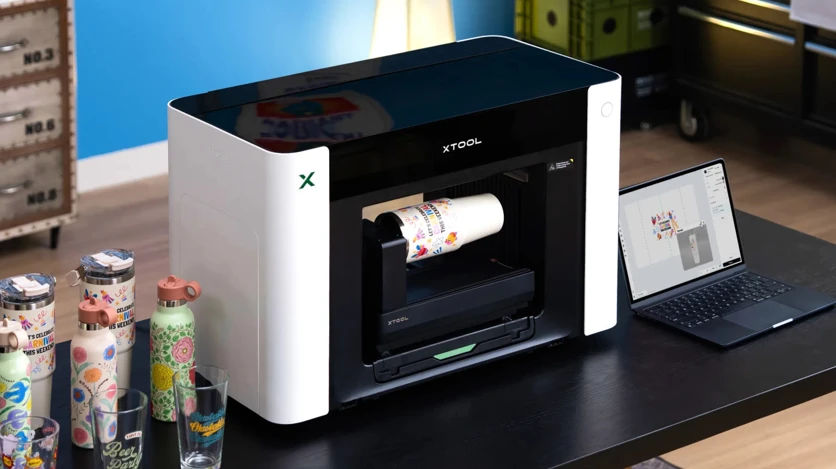
All three editions use the same 330 x 420 mm print bed, build relief up to 7 mm and use xTool's full-area Pixel-Scan system for placement. xTool quotes 720 x 1440 dpi output, a 1440 x 1200 dpi vision system and positioning accuracy within 0.2 mm. The machine also manages white-ink stirring, circulation and printhead moisture protection automatically.
Pixel-Scan combines laser measurement with a CIS scanner that moves across the bed instead of using a single overhead image. xTool says this maintains alignment from the center to the edges. The design directly addresses the edge variation reported on the E1, although production comparisons are still needed to establish how much difference it makes in practice.
The editions are not interchangeable:
- Single UV, $2,199: one Epson F1080 printhead with CMYK, white and varnish, intended primarily for rigid products.
- Dual UV, $3,099: two F1080 heads, adding separate rigid and flexible white inks plus fluorescent red and yellow. It targets flexible materials, fluorescent work and higher-volume UV printing.
- UV + DT Fabric, $3,199: one F1080 head for UV work and a second for fabric ink. It supports direct-to-garment and DTF workflows as well as direct UV printing, but gives up the Dual UV edition's fluorescent and specialist white channels.
Every edition requires the separate LM1 laminator for UV-DTF transfers. The fabric model also needs the usual DTF finishing equipment—adhesive powder and a heat press—or pressing before and after direct garment printing. The "four-in-one" description refers to its supported workflows, not processes completed entirely inside the printer.
Standard O1 UV ink is currently listed at $13.99 per 125 ml bottle, or about $112 per liter. Because the machine uses xTool supplies, its longer-term operating cost will depend on post-launch ink pricing and the amount consumed by routine cleaning.
Initial production machines are now reaching customers, but the O1 does not yet have the E1's depth of ownership data. Buyers should check the delivery estimate for their specific configuration and accessories alongside the first reports on maintenance and support.
Upcoming: HeyGears G1X and Morpho
Both Kickstarter projects offer industrial Epson i3200 printhead options and workflows not available on the E1 or O1. The G1X adds full-color 3D printing, while Morpho pairs its Pro configuration with refillable cartridges and an open system for custom jigs and accessories.
HeyGears G1X: UV Printing and Full-Color 3D
HeyGears has attracted more than 3,700 backers and over $16 million for the G1 Series. The campaign is scheduled to close on September 11, with the first G1X rewards targeted for December 2026.
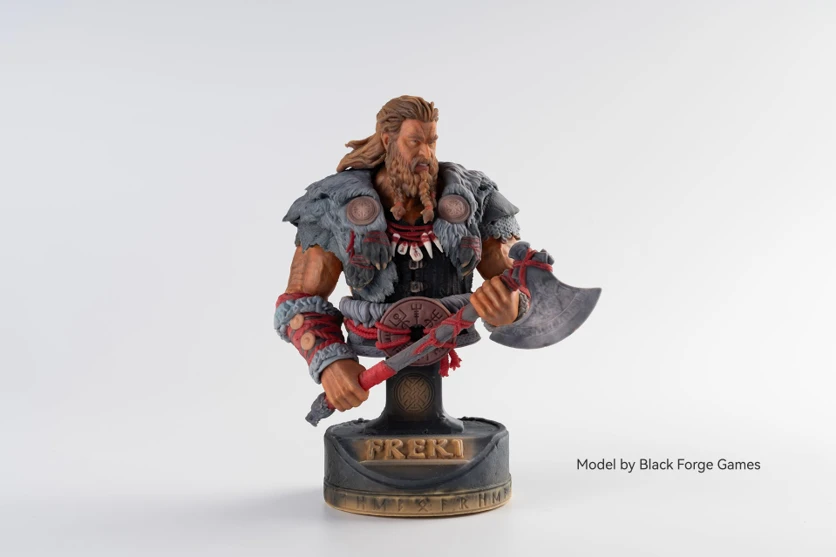
The $3,299 G1X Starter uses an industrial Epson i3200 printhead with eight channels, a 420 x 330 mm flat bed, 1440 x 2400 dpi listed resolution and relief up to 5 mm. The $3,599 Full-3D package adds the Resin Station and material kit needed to build freestanding, full-color objects rather than decorating an existing surface. Its open-bed build volume reaches 330 x 420 x 130 mm; the enclosed configuration reaches 130 x 330 x 150 mm.
That full-color 3D process is the reason to consider the G1X over the E1 or O1. It combines colored and transparent resin with water-soluble support and is intended to produce finished color without painting, according to HeyGears. The process uses more materials than conventional UV printing: the company's example for a 197.8 x 110.8 x 77 mm model consumes nearly a liter of resin, including its water-soluble support material.
HeyGears gives the printhead six months of campaign warranty coverage and the main unit one year. Third-party ink is not blocked in hardware or software, but the company ties its print profiles and warranty support to official materials. The lower-cost $1,999 G1 uses an F1080 head and is now targeted for March 2027, which rules it out for buyers who need a machine this year.
Read our HeyGears G1 Series guide for the complete package and full-color 3D workflow.
Morpho: A More Open Desktop Platform
Morpho's campaign has passed $10 million from more than 2,800 backers and runs until October 14. Current rewards start at $1,799 for the F1080-based Standard model and $2,999 for the i3200 Pro. Factory shipping is expected between December 2026 and January 2027.
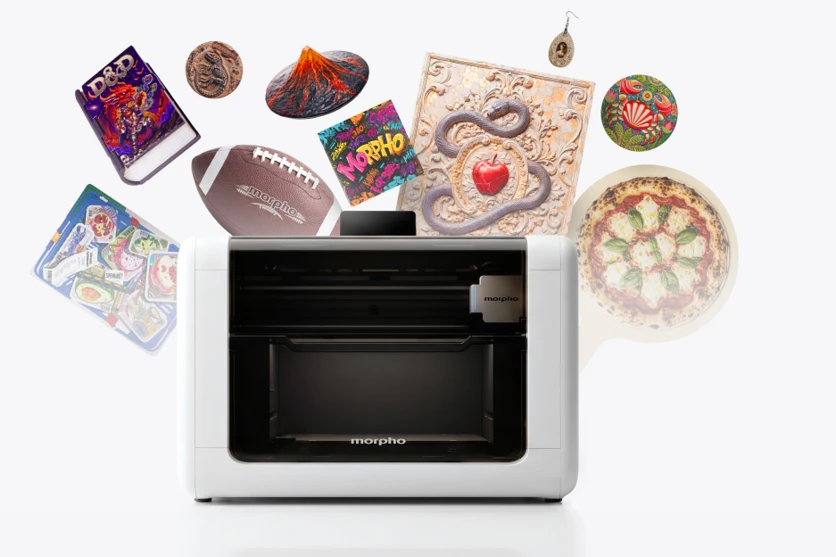
Both versions use a moving gantry over a stationary object, four cameras, infrared surface measurement and a built-in spectrophotometer. The enclosed area is 330 x 220 mm; an included A3 bed extends it to 420 x 330 mm. Morpho quotes 0.2 mm placement accuracy and supports refillable cartridges.
The Standard machine supports relief up to 5 mm, while the Pro extends that height to 60 mm.
Morpho's clearest difference is its open accessory approach. Its Open Jig System, electrical connections and software SDK are intended for custom fixtures and accessories, while refillable cartridges reduce dependence on a single consumable format. The optional rotary, electrostatic mat and roll-to-roll module cover cylinders, thin media and UV-DTF transfers. Published campaign ink works out to about $108 per liter for CMYK and $83 per liter for white or varnish.
Our Morpho UV Printer article covers the printheads, software, low-odor ink claims, maintenance system and accessories in detail.
Other Desktop UV Printers Worth Knowing
The E1 and O1 are the closest match for buyers who want an enclosed, consumer-style workflow. Several more conventional flatbeds remain relevant for businesses that prioritize open ink, dealer service or established RIP software.
OMTech Spectra A3+
OMTech currently lists the Spectra A3+ at $2,999.99 with one Epson F1080 head or $3,999.99 with two, and says orders ship in one business day. It has a 350 x 450 mm vacuum bed, 140 mm media clearance, infrared height sensing and up to 5 mm relief. The dual-head version separates CMYK and white from varnish and is the better fit for repeated production work.
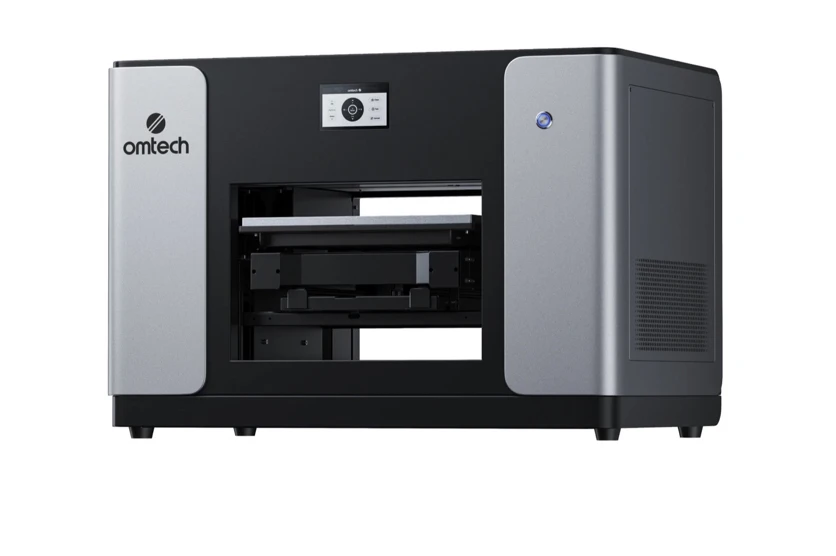
Its open 250 ml ink tanks are the main advantage. OMTech sells six 500 ml bottles for $199.99, about $67 per liter, and does not use proprietary cartridges. The tradeoff is a more conventional print-shop workflow, Windows RIP-style software and greater responsibility for daily maintenance. OMTech covers the main machine for one year but the printhead for one month.
Epson SureColor V1070
Epson's $9,299 SureColor V1070 has a smaller A4-class 212 x 299 mm bed and uses proprietary 140 ml UltraChrome UV packs. Its direct online listing was out of stock when checked, although the machine is also sold through Epson dealers.
On price, bed size and relief capability, newer machines appear stronger. Epson's case rests instead on its dealer network, proprietary printhead and Edge Print PRO workflow. For a shop where downtime is expensive, access to local service may matter more than the headline specifications.
Longer ePrint and Procolored
Longer now lists the single-head ePrint SE from $1,699 and the dual-head ePrint at $2,499, with shipping estimated from the end of September. Its current specification includes an open ink system, a 310 x 420 mm bed, 12 channels on the dual-head model, up to 15 mm of color relief and UV, UV-DTF, DTF and DTG workflows.
Longer has expanded the ePrint specification since launch, but its original Kickstarter shipping target was June 2026 and the current store still lists new orders as pre-orders. Until production units are shipping and independently reviewed, it remains difficult to rank alongside the leading choices above.
Procolored continues to sell compact UV flatbeds from the $2,299 A5 V4 to the $5,999 dual-head A3 V11 Pro. These are more traditional Windows RIP machines with bottled ink and legacy Epson-derived printheads. The range is available now, but buyers should evaluate support and software carefully: Procolored's official download server distributed malware-tainted printer software during 2025 before the files were replaced. That history remains relevant when the printer requires vendor software on a production PC.
Generic XP600 flatbeds can cost less and may suit an experienced technician, but low purchase price can be offset quickly by setup work, uncertain software, replacement parts and limited local support. They are not equivalent to an enclosed appliance simply because the bed and resolution figures look similar.
Ink Cost Is Only the Starting Point
| Machine | Ink system | Published price per liter |
|---|---|---|
| eufyMake E1 | Proprietary 100 ml cartridges | About $300; $200-240 with subscription |
| xTool O1 Omni | Proprietary 125 ml standard bottles | About $112 at current introductory price |
| HeyGears G1/G1X | 300 ml official UV bottles | About $77-117 at campaign prices |
| Morpho | Official or refillable cartridges | About $108 CMYK; $83 white/varnish |
| OMTech Spectra A3+ | Open bottled-ink system | About $67 for OMTech's 3-liter set |
| Epson V1070 | Proprietary 140 ml packs | About $550 |
Bottle price is not the same as cost per finished item. White layers, relief height, cleaning cycles, failed prints and maintenance behavior can outweigh the headline per-liter figure. Introductory and crowdfunding consumable prices can also change.
Published bottle prices omit the ink lost to startup, idle maintenance and cleaning. White consumption also rises sharply on dark substrates and relief work. For newly shipped or crowdfunded machines, those costs will remain difficult to judge until owners have accumulated longer-term data.
The printhead should be treated as a wear item even when a manufacturer gives it a longer expected life. Warranty periods vary sharply: three months on the E1 head, six months for the HeyGears campaign, and one month on the OMTech Spectra, while the chassis generally receives one year. Replacement price, availability and the procedure for fitting a head belong in the cost model.
Built-in carbon and HEPA filters do not replace the manufacturer's ventilation guidance. Ink, pretreatment and maintenance fluids need an appropriate workspace, while filters, waste containers and cleaning supplies should be included in operating costs.
Which Desktop UV Printer Should You Buy?
- Choose the xTool O1 Single UV if the work is mainly rigid products and 7 mm relief, lower published ink prices and full-bed scanning matter. Initial O1 units are shipping, while newly placed orders currently carry a late-October estimate.
- Choose the xTool O1 Dual UV for separate white inks for rigid and flexible materials, fluorescent colors or higher UV throughput. It is the strongest all-round configuration here on current specifications. Choose UV + DT Fabric instead if garments matter more than those specialist UV inks. The edition cannot be changed later.
- Buy the eufyMake E1 if the machine is needed immediately and a longer record of owner experience matters more than the O1's additional features. Its mature workflow and established troubleshooting record reduce uncertainty for a first-time UV-printer owner.
- Back the HeyGears G1X Full-3D only if printing complete full-color 3D objects is central to the plan. That capability, rather than ordinary flat-bed UV work, is what separates it from the E1 and O1.
- Consider Morpho for its i3200 option, refillable cartridges, open accessory system and relief up to 60 mm on the Pro model.
On features and current pricing, the O1 is our overall pick. It offers a higher relief limit, lower published ink price, full-bed scanning and a choice between specialist UV and fabric configurations. The E1 remains the more predictable purchase for now, simply because more than a year of owner experience provides a clearer picture of maintenance, reliability and support.
Frequently Asked Questions
What is the best desktop UV printer in 2026?
The xTool O1 Omni is our best overall recommendation in September 2026 because it combines competitive pricing with a 330 x 420 mm bed, 7 mm relief, full-bed scanning and three configurations. The Dual UV edition is the strongest all-round version for UV work. The eufyMake E1 remains the better-established option, Morpho stands out for its i3200 Pro model and open accessory system, and HeyGears G1X is the specialist choice for full-color 3D objects.
Is the xTool O1 Omni available now?
Yes. Initial xTool O1 Omni orders have begun shipping and early customers are receiving machines. xTool is accepting new orders from $2,199, with the US store currently estimating late-October dispatch for those orders. The LM1 laminator and RF1 roll feeder are expected from mid-November.
Which xTool O1 Omni edition should I choose?
Single UV is the $2,199 entry model for rigid products. Dual UV costs $3,099 and adds a second UV printhead, flexible and rigid white inks, fluorescent red and yellow, and higher UV throughput. The $3,199 UV + DT Fabric edition replaces those specialist UV channels with a dedicated textile head for DTG and DTF. The editions cannot be upgraded into one another later.
How much does the eufyMake E1 cost?
The official US price is $2,409 for the Basic bundle with ink and $3,209 for the Deluxe bundle with ink, rotary and UV-DTF laminator. Temporary discounts can reduce those prices. The E1 is listed as in stock with shipping in one to three business days.
Which desktop UV printer has the cheapest ink?
OMTech has the lowest currently published first-party price in this comparison at about $67 per liter for its six-bottle, 3-liter set, and its system is open. Morpho lists about $83 to $108 per liter, HeyGears about $77 to $117 at campaign prices, xTool about $112 per liter for standard ink at its introductory price, eufyMake about $300 before subscriptions, and Epson about $550. Actual cost per print also depends on cleaning and white-ink use.
Can a desktop UV printer print on T-shirts?
The xTool O1 Omni UV + DT Fabric edition supports both DTG and DTF garment workflows through a dedicated fabric printhead. DTF still requires adhesive powder and a heat press, while DTG requires pressing before and after printing. Longer also lists DTG and DTF support for ePrint, but the machine remains a pre-order with shipping currently estimated from the end of September.
Can these UV printers make full-color 3D objects?
Most desktop UV printers decorate an existing object and build only a few millimeters of raised ink. The HeyGears G1X Full-3D package is the exception in this group: its Resin Station supports freestanding full-color objects with colored, transparent and water-soluble support materials. It remains a Kickstarter product with first shipments targeted for December 2026.
Should I wait for HeyGears G1X or Morpho?
They are worth waiting for only if their specialist features justify the crowdfunding and schedule risk. G1X is the stronger choice for full-color 3D objects and uses an i3200 printhead. Morpho combines an i3200 Pro model with refillable cartridges and an open jig and accessory system. For conventional desktop UV product printing, E1 and O1 remain the more direct choices.
Do desktop UV printers need ventilation?
Yes. Enclosures and HEPA or activated-carbon filters reduce particles and odor but do not eliminate the need for a ventilated workspace. Ink, pretreatment and cleaning fluids should be handled according to their safety documents, and replacement filters and waste containers should be treated as operating costs.
What matters most when comparing UV printer specifications?
Start with the printhead, ink configuration, print area, object clearance and the exact workflows included. Then compare ink price, cleaning behavior, printhead warranty, replacement parts, software and delivery status. Relief height and headline resolution matter less if the machine cannot support the materials, throughput or service requirements of the intended work.
Sources
- eufyMake E1 official product page, for current bundle pricing, stock status, specifications and warranty (checked Sep 9, 2026)
- eufyMake's September E1 software update, for bidirectional printing, current limitations and expired-ink handling (checked Sep 8, 2026)
- eufyMake's High-Capacity CISS update, for tank sizes, supported workflows and its not-yet-on-sale status (checked Sep 9, 2026)
- FauxHammer's one-year eufyMake E1 review, for long-term owner experience (checked Jul 4, 2026)
- Tom's Hardware eufyMake E1 review, for measured cleaning-fluid and ink consumption (checked Nov 6, 2025)
- xTool O1 Omni official store, for current prices and estimated dispatch of new machine and accessory orders (checked Sep 9, 2026)
- xTool's O1 shipping tracker, for launch-order fulfillment by batch (checked Sep 9, 2026)
- xTool O1 Omni overview and specifications, for edition differences, print area, printheads, inks, relief and positioning (checked Sep 9, 2026)
- xTool O1 Omni support manual, for production specifications, maintenance hardware and supported materials (checked Aug 28, 2026)
- xTool O1 Omni UV ink, for current introductory pricing and bottle capacities (checked Sep 9, 2026)
- HeyGears G1 Series Kickstarter FAQ, for current rewards, model differences, warranty and December 2026 and March 2027 targets (checked Sep 9, 2026)
- HeyGears G1X product page, for printhead, print area, full-color 3D workflow and campaign ink prices (checked Sep 9, 2026)
- Morpho Kickstarter campaign and FAQ, for current rewards, shipping target, ink prices and model specifications (checked Sep 9, 2026)
- Morpho product page, for print area, cameras, accessory range and open platform (checked Sep 9, 2026)
- OMTech Spectra A3+ official product page, for current pricing, availability, specifications, ink and warranty (checked Sep 9, 2026)
- Epson SureColor V1070 official product page, for current price, stock status, ink system and service options (checked Sep 9, 2026)
- Longer ePrint official product page, for current pre-order price, September estimate, configurations and workflow (checked Sep 9, 2026)
- Procolored V11 Pro official product page, for current pricing, availability and specifications (checked Sep 9, 2026)
- BleepingComputer's report on the malware distributed through Procolored's official software downloads (checked May 19, 2025)
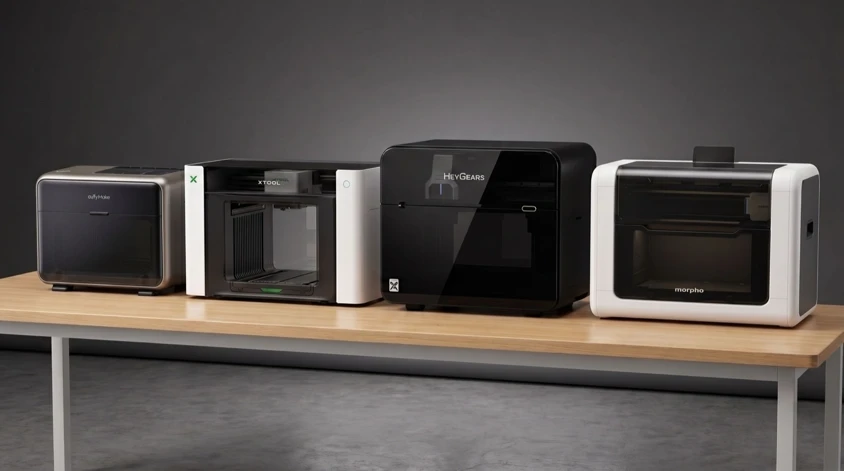
- Cover is an illustrative lineup of the eufyMake E1, xTool O1 Omni, HeyGears G1 and Morpho, not to scale. In-body images are official product media from their respective manufacturers.
Share this article

Related articles
UV Printers · Jun 29, 2026
xTool O1 Omni Printer: Prices, Editions, and Ink Costs
xTool says 'from $1,699' for a 4-in-1 that prints on wood, tumblers, and T-shirts. That number is a deposit-locked early bird on the single-head model, and the only edition that does all four jobs is $2,799. Here's every price, the published ink costs, and what it can't do.
19 min read
3D Printers · Jun 12, 2026
HeyGears G1 and G1X: Full-Color 3D Printing Gets a Desktop Price
Full-color 3D printing used to mean a $50,000 machine. HeyGears put it on a desk for $3,299. The three tiers print very different things, and HeyGears has now published the ink, resin and printhead numbers that decide the real cost of ownership. Here's every price, what each pack buys, and what it costs to run.
18 min read
UV Printers · Jul 2, 2026
Morpho UV Printer Kickstarter Passes $10 Million
More than 2,800 people have backed the campaign, which runs until October 14. Morpho has also detailed the two printheads, open jig and ink system, accessories and expected shipping.
10 min read